


Seeing Black Women. Portraits at Jessica Ann Peavy Gallery
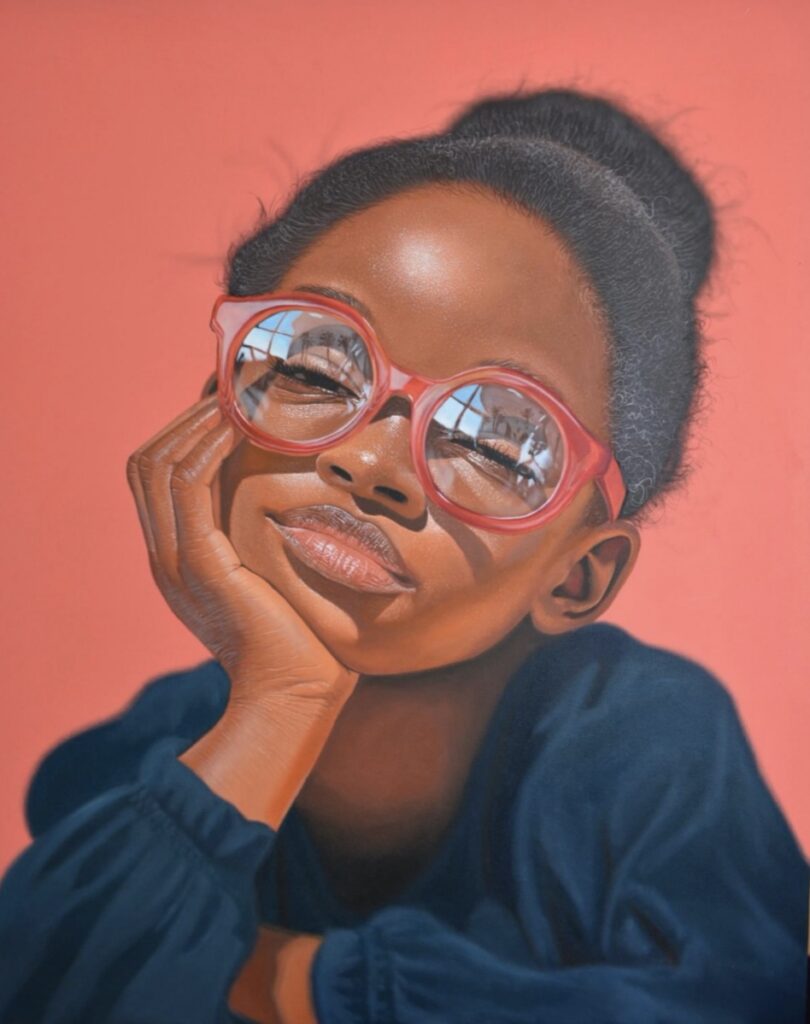
Outside of booth 259, a square-eyed Black girl observes you in Eddy Ochieng’s Daydreamer (2026). Reflective light glimmered white, and the depth of field fell shallow from her face to her shoulders. By the time I arrived, the piece had already been sold. Its juvenile smirk captured confidence, precocity, and pretention with vibrating precision from its textural weight. The weight draws you in, and the exercise of depth holds its gaze with yours.
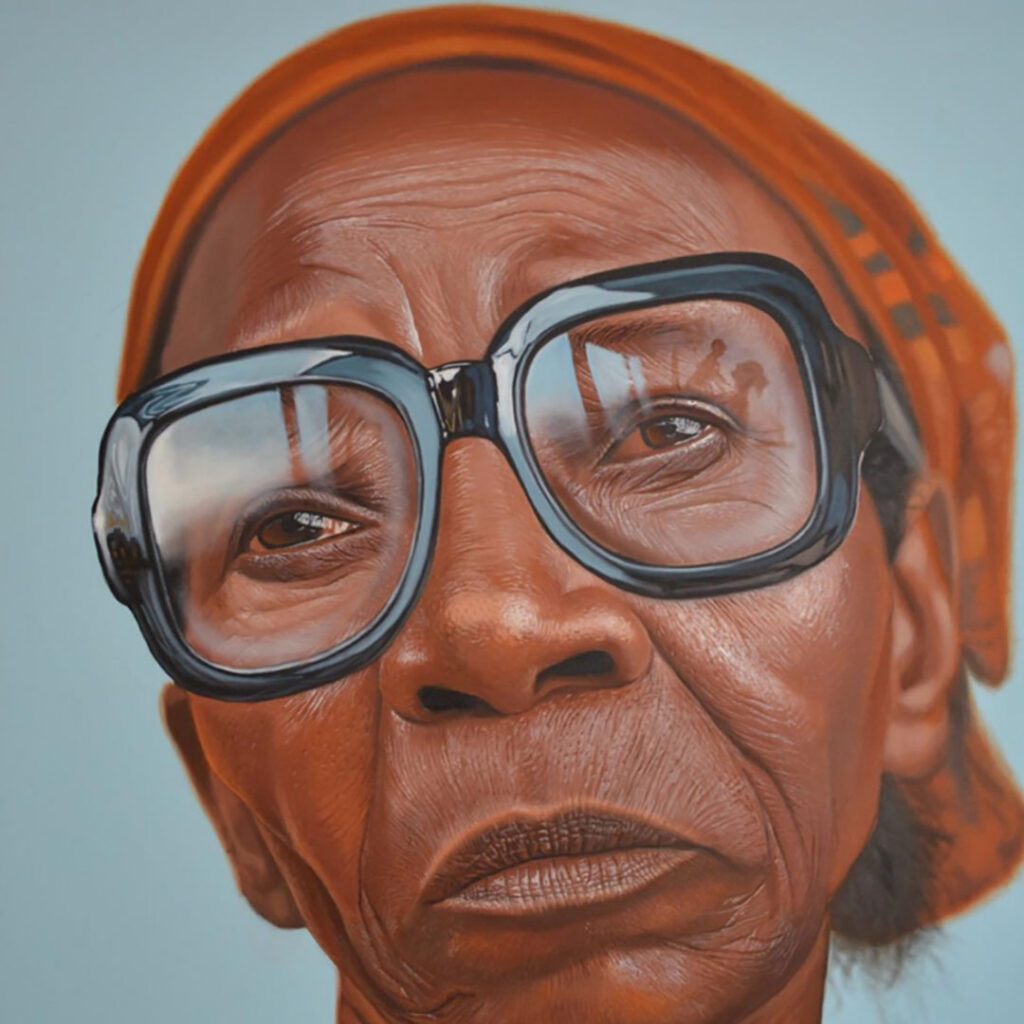
The artist-turned-gallerist, Jessica Ann Peavy, found Ochieng’s work online. The first ones she saw were seniors painted with deserved grace and distinct wisdom. She chose pieces by Ochieng that display the scope of his 15-year practice. Although Ochieng was near Hampton’s Fine Art Fair, he wasn’t present when I arrived. He was spending quality time with his wife and one-year-old daughter at their hotel.
Matrilineality was the curatorial throughline for Peavy at Hampton’s Fine Art Fair.
“The best way to destroy the black community is to destroy black women,” Peavy said, “the best way to build the black community is through art.” She suggests that what lasts is who’s in charge and the art that’s left behind. Both are sensitive temporal artifacts that carry the spiritual presence of what was into what can be. In Peavy’s curation, art is hope.
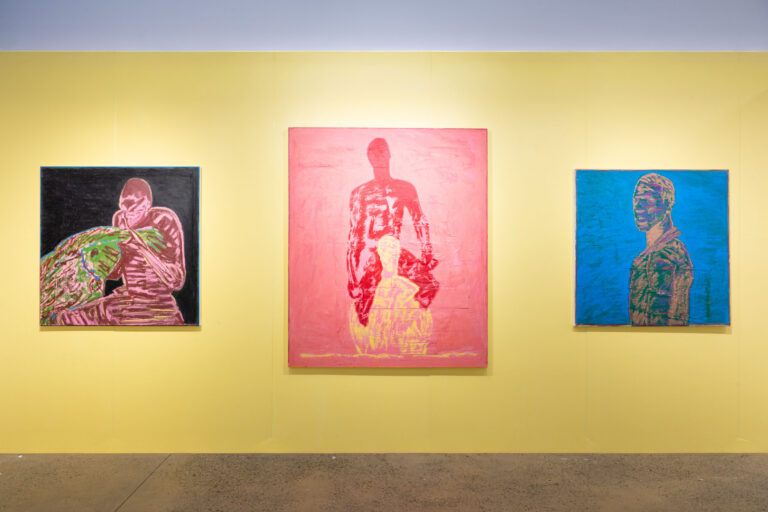
Peavy guided me to Augusto Fanjul and his wife in Ochieng’s absence. Fanjul’s wife was his translator because Fanjul didn’t speak English well. Motion faces the back and chest of Fanjul’s woman in Reassembling and Holding Together.
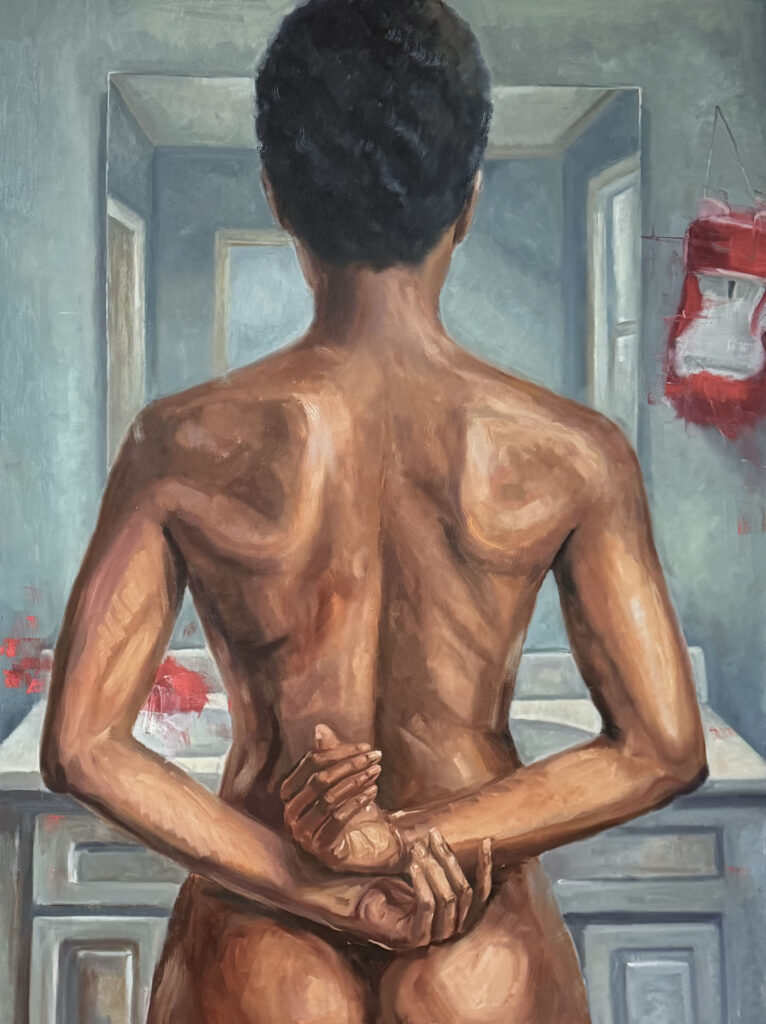
Women’s boxing gloves make a clear connection between the tension and vulnerability evoked in women’s experiences.
Red boxing gloves pop at the margins of the pieces. Closer framing could exclude the gloves and bring greater focus to the mood conveyed by the framing of her body. Including gloves activates women’s war with enduring vulnerability as a motif that’s both a power symbol and a Sisyphean allegory.
In Holding Together, her stolid gaze signals the numb reality of how Black women endure the poles of gender. Black women uniquely maneuver a positionality where intersecting race and gender contrast each other, which compounds how oppression and violence meet them. Fanjul’s boxing gloves acknowledge that constant fight. His impressionistic mark-making makes the body a site for constant activity. Even rest cues labor.
His work often uses two characters: one black, one white, but race problematizes Fanjul’s work. Partnering Black and white women together as equal victims of patriarchy distances his work from reflecting reality. In bell hooks’ Ain’t I a Woman, the author, asserts Black women uniquely endure racism and sexism. Racist stereotypes like mammies and Black women’s performance of culturally defined “male” work weaponized forced labor to masculinize Black women as sub-human creatures.
Because race and sex overlap, Fanjul’s depiction of a Black woman without rest from hegemonic oppression isn’t a show of resilience. Reassembling and Holding Together subvert the white supremacist positive depictions of a self-sacrificing Black woman. Fanjul’s depiction is a reflection, and with accouterment stripped from the woman, we get to hold the gaze of a Black woman who’s safe despite her exhaustion.
People inherently don’t notice how Black women’s everyday lives are affected by living in a constant fight-or-flight with no respite. Fanjul finds it clear enough to highlight in his work.
“I support hard-working mothers; my sister, my wife, and my grandmother are a big part of my fuel and my work,” Fanjul said. “I consider myself a person who loves women.”
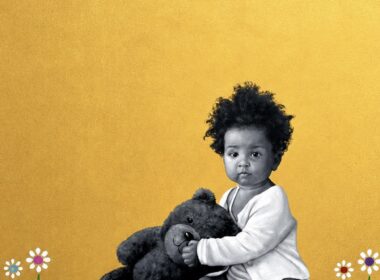
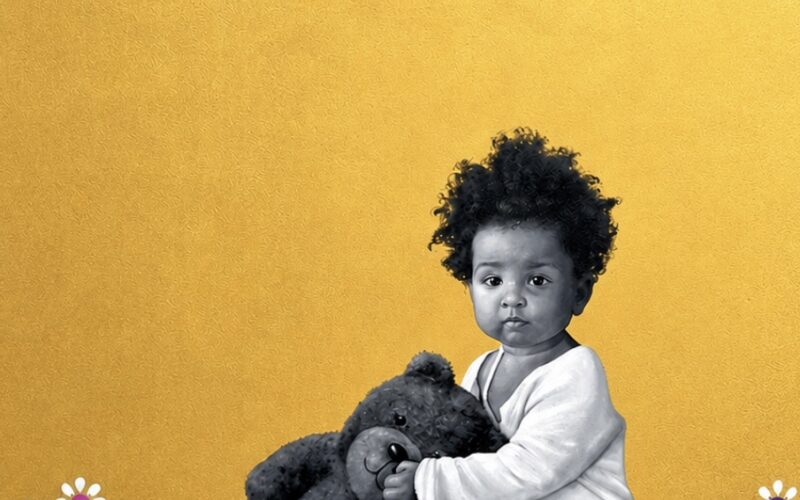
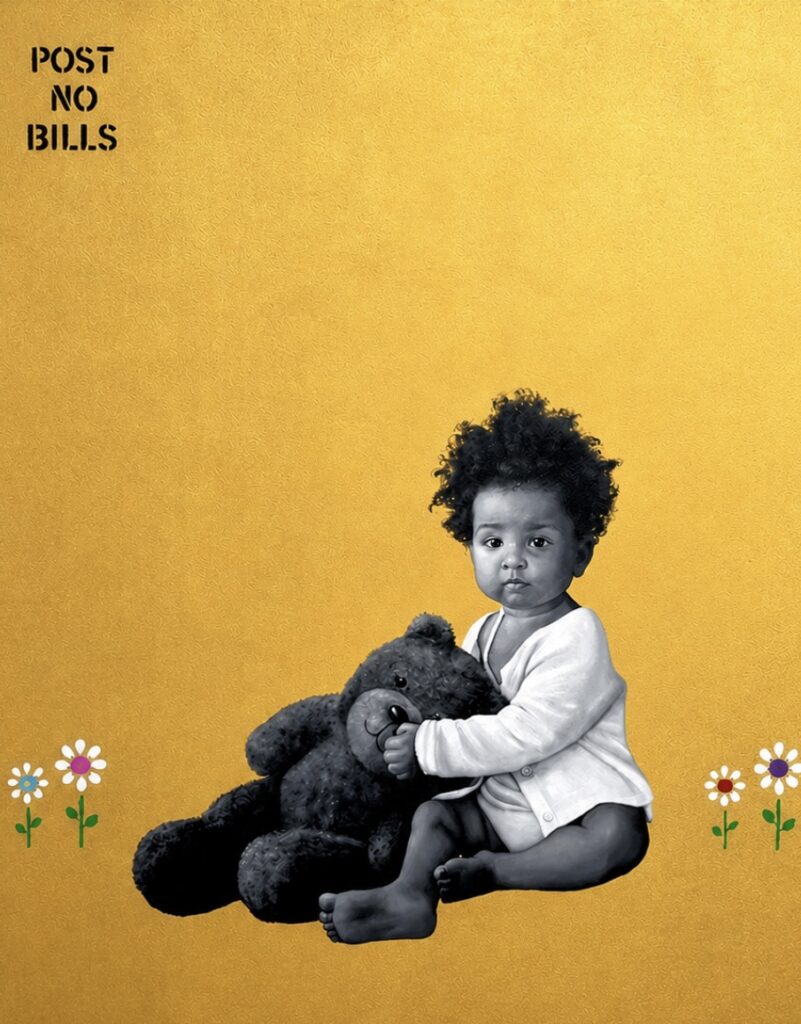
The left shoulder in Holding Together points to Guy Stanley’s “Give US Our Flowers” series. A poofy-haired Black girl, eyes wide and hands on a teddy bear in Holding On glows with potential. A baby Black boy wearing an oversized Knicks Jersey and a bucket hat in The Fan gazes off. For four years, Piloche’s series, “Give Us Our Flowers”, has celebrated Black children. Each child is loved, comes from a good home, and has a fruitful future.
He studied painting at Paier College of Art in Connecticut before articulating his voice for abstraction and realism at Yale University.
As a full-time artist, he considers his practice a business because, to him, art is a commodity. He approaches his practice as if he were the CEO of a company. Each piece is his stock, and his collectors are his board members.
He asked me, “What’s the worst thing that can happen to a CEO?” Without a clear answer, he told me, “When their board members lose confidence in the CEO because of low stock value.”
Competition in the art world and being first-generation influenced Piloche’s pragmatic practice. His mother used to tell him that she scrubbed toilets so he would never have to.
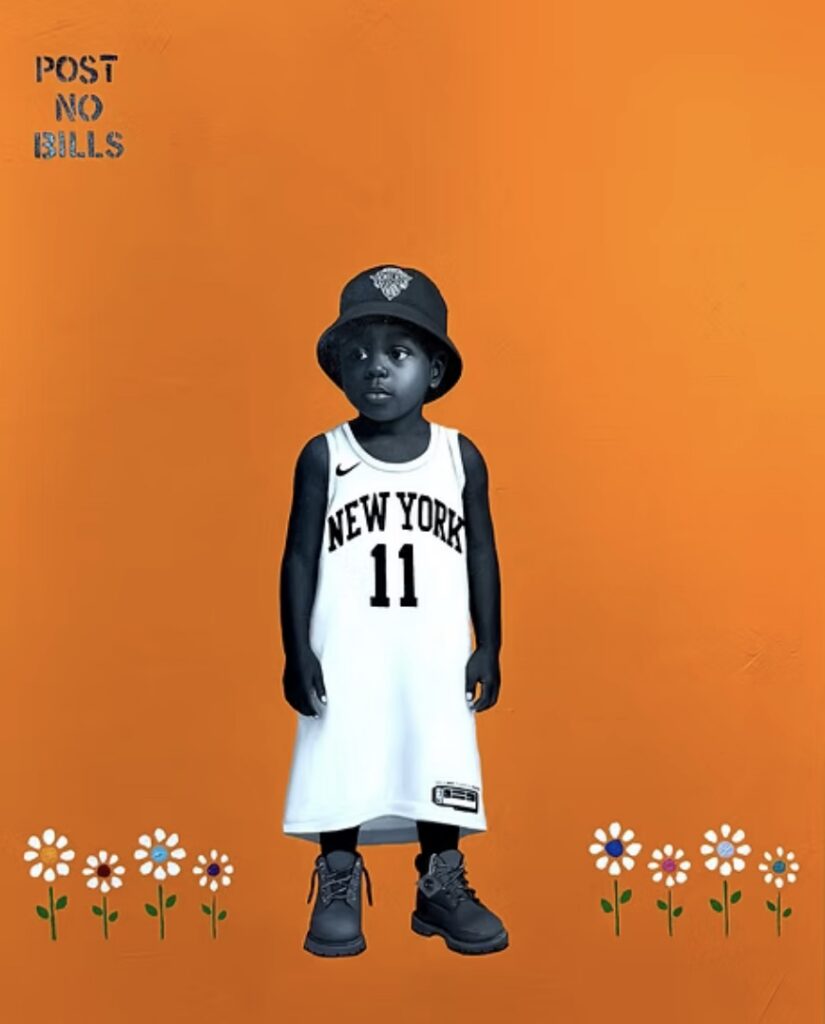
She felt that studying painting at university would lead to an unstable lifestyle, which would not have justified the struggles his family endured when immigrating to the U.S. He felt that failure wasn’t an option. Daisies, his mom’s favorite flowers, are in his pieces as a maternal homage and are a nostalgic appeal to the first flower that children learn to draw.
He painted “Give Us Our Flowers” with FUBU in mind. The series was initially dedicated to his friend who passed away. Painting children helped Piloche process that reverence should begin early in life, so there’s time to share one’s feelings with people while they’re alive.