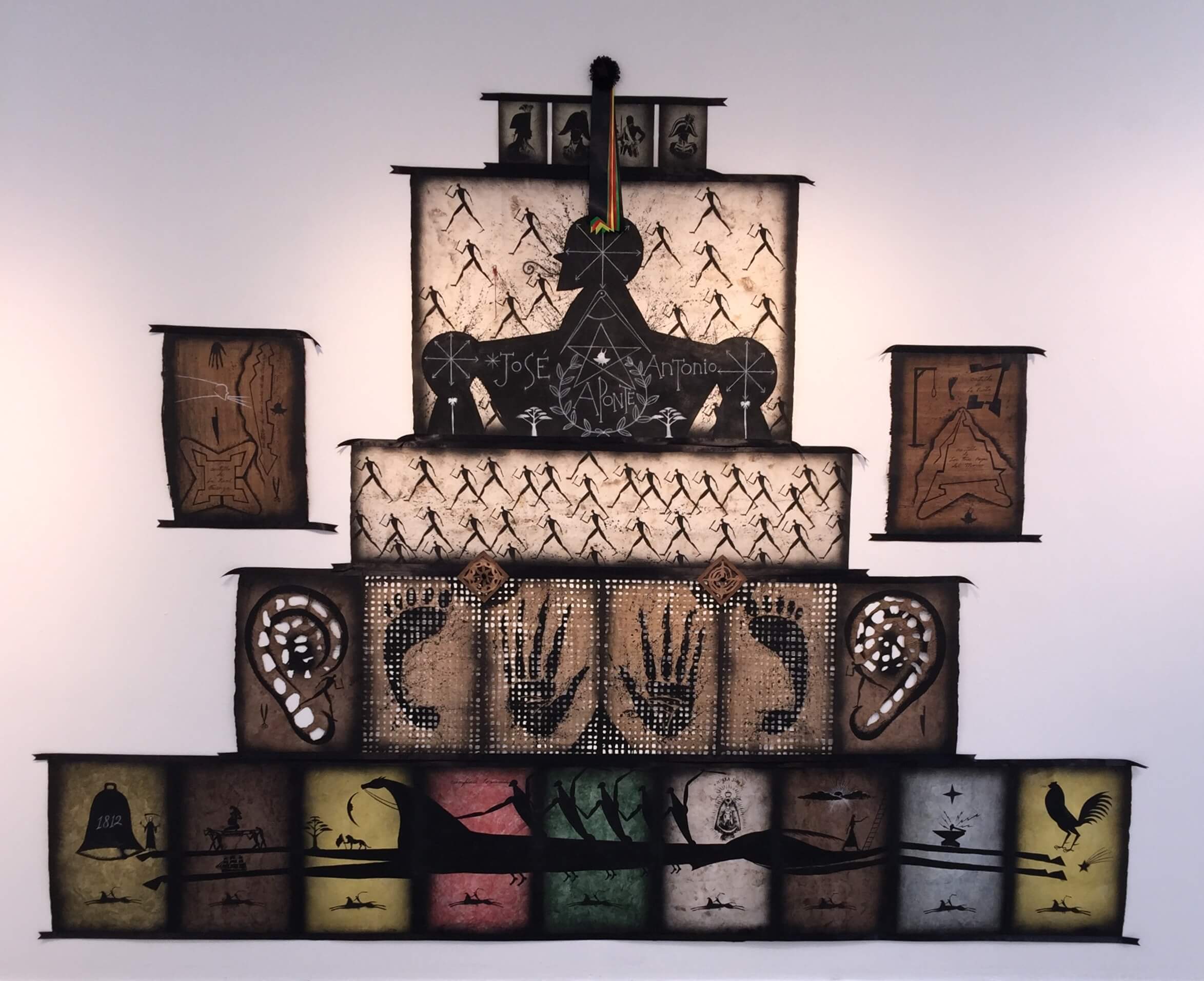

The institutions we build, the histories we preserve, and the stories we choose to tell are all part of a much larger cultural inheritance. This week, that inheritance comes into focus through significant changes in museum leadership, new curatorial appointments, certain revelations hidden within familiar works of art, and the return of a writer to the imaginative terrain of fiction. From Harlem to Venice, Miami to London, here are some of the stories that caught our attention this week.
Thelma Golden to Step Down as Director of the Studio Museum in Harlem
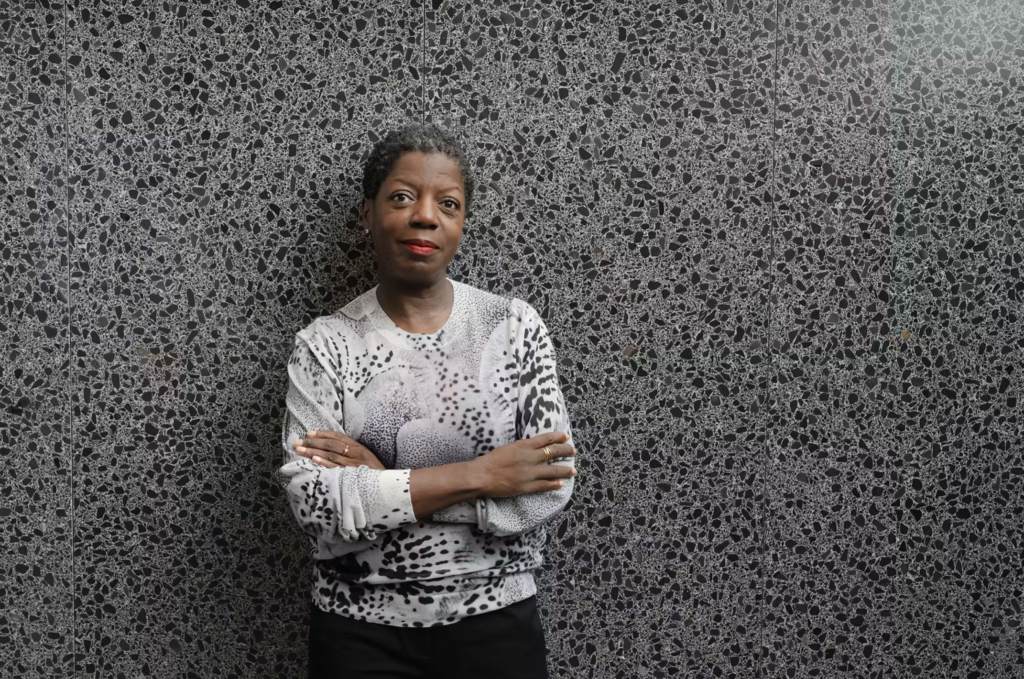
The Studio Museum in Harlem has announced that Thelma Golden will step down as its Director and Chief Curator in late 2027, bringing an end to more than two decades of leadership at one of the United States’ most influential institutions dedicated to artists of African descent. The announcement was made on November 24 by Kathryn C. Chenault, Chair of the Museum’s Board of Trustees, who confirmed that a search committee has been established to identify Golden’s successor. She will remain in her position until a replacement is appointed to ensure a smooth transition.
Golden’s relationship with the institution spans nearly four decades. She first joined the Studio Museum as an intern while studying at Smith College, later returning in 2000 as Deputy Director for Exhibitions and Programs before being appointed Director and Chief Curator in 2005. During her tenure, she helped transform the museum’s international standing, championing generations of Black artists, supporting emerging curatorial voices and expanding the visibility of African and diasporic contemporary art within major cultural institutions.
Her departure comes a year after the opening of the museum’s purpose-built home on West 125th Street, a landmark project that followed a seven-year closure and a fundraising campaign that has raised more than $322 million. As the institution approaches its 60th anniversary in 2028, Golden leaves behind an expansive institutional legacy shaped by artistic advocacy, scholarship and the development of a new generation of Black museum professionals.
Sheikha Hoor Al Qasimi Appointed Curator of 2028 Venice Biennale
Emirati curator Sheikha Hoor Al Qasimi has been appointed to curate the 62nd International Art Exhibition of the Venice Biennale, scheduled to take place from April 8 to November 26, 2028. The appointment, announced on November 26, makes Al Qasimi the first Arab curator to lead the prestigious international exhibition and the seventh woman to hold the position.
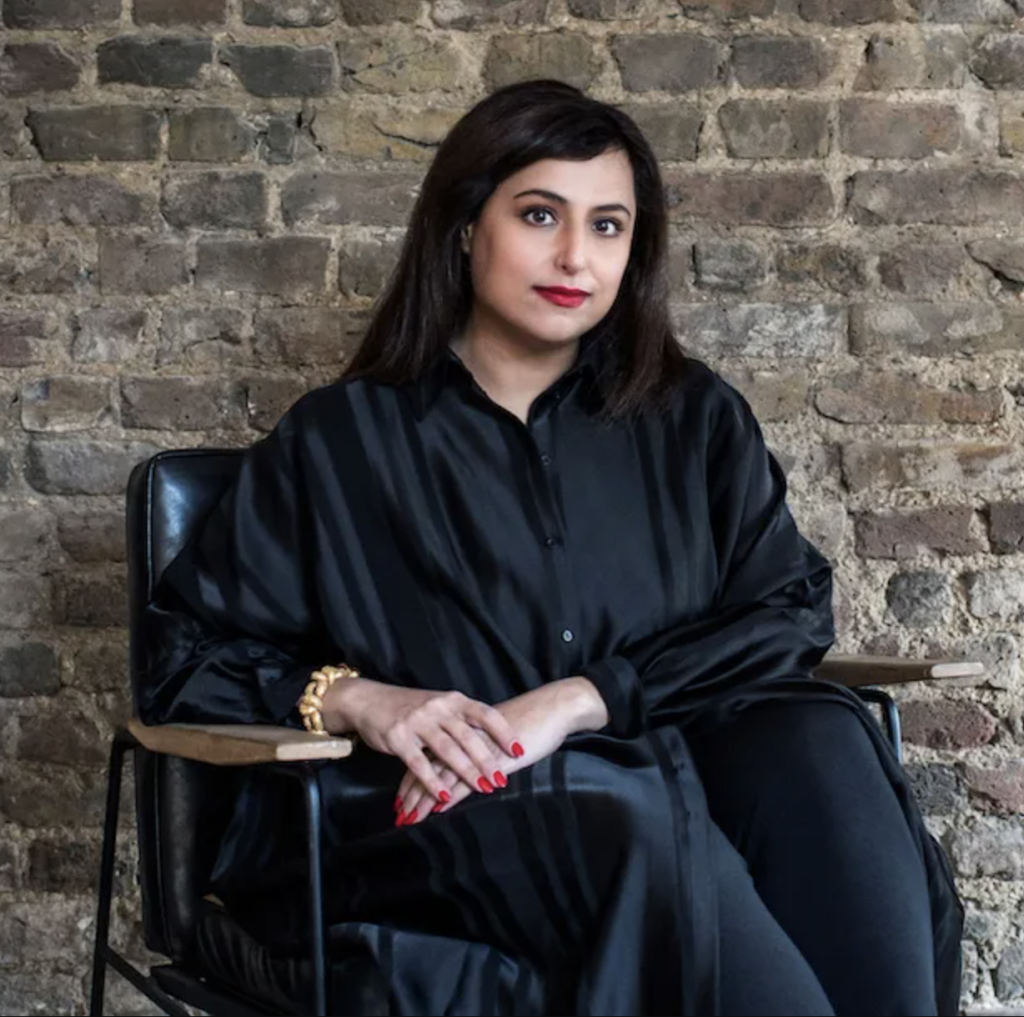
Al Qasimi is the President and Director of the Sharjah Art Foundation, which she established in 2009 to support contemporary art and foster cultural exchange across the United Arab Emirates and internationally. She has directed the Sharjah Biennial since 2003, playing an instrumental role in developing the emirate into an important centre for contemporary artistic production and international cultural exchange. Her curatorial experience also includes the 15th Sharjah Biennial in 2023, the 2025 Aichi Triennale and the 2026 Biennale of Sydney.
Her appointment follows the 61st edition of the Venice Biennale, In Minor Keys, curated by the late Cameroonian curator Koyo Kouoh, whose exhibition proceeded as planned following her death in May 2025. Al Qasimi’s selection continues an important shift in the international exhibition’s curatorial leadership, bringing perspectives shaped beyond traditional Western art institutions into a platform that remains central to contemporary art discourse. The theme and title of the 2028 exhibition are yet to be announced.
The Bronx Museum Acquires Evita Tezeno’s True Sistahs
The Bronx Museum of the Arts has acquired True Sistahs, a collage-painting by Texas-based artist Evita Tezeno, adding another significant work by a Black woman artist to its permanent collection. The acquisition was announced on November 24 by Luis De Jesus Los Angeles, the gallery representing the artist.
The acquisition was made possible through the support of the museum’s Board of Trustees, with Melissa Osterwind spearheading the process, alongside curator Eileen Jeng Lynch and museum director Shamin M. Momin. Additional support came from Dallas-based patrons and Black Arts DFW.
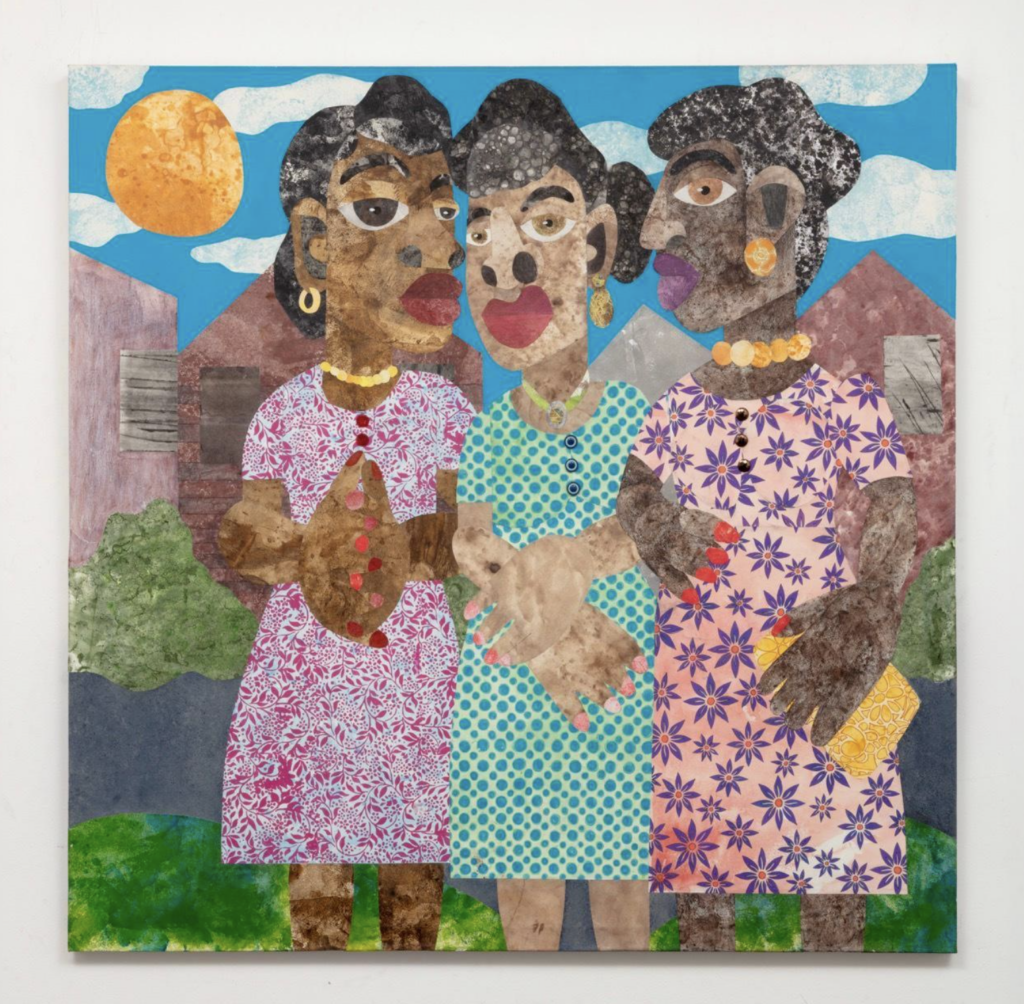
True Sistahs was previously featured in Solace & Sisterhood, a collaborative exhibition presented between 2024 and 2025 at the David C. Driskell Center at the University of Maryland and the Museum of Contemporary Art, Arlington. The exhibition explored Black female beauty, self-identity and the bonds of friendship through the artistic practices of Tezeno, Lavett Ballard and Amber Robles-Gordon.
Working across painting and collage, Tezeno draws on personal and cultural histories, combining expressive figures, patterned surfaces and layered materials to explore Black identity, memory and everyday experiences. The museum’s acquisition places her work within an institutional collection committed to expanding the narratives through which American art history is understood, while recognising the contributions of artists whose practices have often received limited representation within major museum collections.
Basquiat’s Hidden UV Layers to Be Revealed in a New Exhibition in Miami
Nearly four decades after his death, the paintings of Jean-Michel Basquiat continue to reveal new dimensions of his artistic practice. Opening on November 29, 2026 at the Institute of Contemporary Art, Miami, Basquiat. “A Hidden World” brings together four paintings that contain images, inscriptions and markings invisible under ordinary lighting, made visible through ultraviolet illumination.
Curated by Dieter Buchhart and Anna Karina Hofbauer, the exhibition examines Basquiat’s use of ultraviolet-reactive materials between 1982 and 1984. The presentation includes Emblem (1984), Untitled (Orange Sports Figure) (1982), Cash Crop (1984) and O.M.R.A.V.S. (1984). Among the most striking discoveries is the phrase “invisible men”, which emerges from the surface of Emblem when exposed to ultraviolet light, offering another layer through which to consider the artist’s recurring engagement with race, visibility and historical erasure.
The exhibition also draws attention to Basquiat’s experimental approach to painting, particularly his use of concealed imagery and materials that complicate the relationship between what is seen and what remains hidden. Presented at ICA Miami’s Expansion Space in the Miami Design District, the exhibition will run until February 15, 2027. It offers audiences an unusual opportunity to encounter familiar works through a different kind of looking, revealing how much of Basquiat’s visual language exists beyond the immediately visible surface.
Sarah Ladipo Manyika Returns to Fiction with A Kind of Jazz
Nigerian-born British-Nigerian-American writer Sarah Ladipo Manyika is set to return to fiction with A Kind of Jazz, her forthcoming novel acquired by independent publishing house Cassava Republic Press. Announced on November 26, 2026, the acquisition covers UK and Commonwealth rights, excluding Canada, with publication scheduled for Spring 2027.
Set in South-East London against the backdrop of the 2021 pandemic, the novel follows Jeremiah “Jazz” Magamba, a healthcare assistant in his early sixties whose seemingly quiet life conceals a remarkable past in London’s vibrant 1970s Afro-rock scene. When an unexpected encounter with a busker brings memories of his earlier life to the surface, Jazz is compelled to reconsider his personal history, the possibilities he left unexplored and the connections that continue to shape him.
A Kind of Jazz marks Manyika’s third novel with Cassava Republic, following In Dependence, which established her as an important voice in contemporary African fiction, and Like a Mule Bringing Ice Cream to the Sun, which was shortlisted for the Goldsmiths Prize. Her forthcoming work brings together music, migration, memory and the experience of ageing, drawing attention to a generation whose cultural histories are often overlooked in contemporary literary narratives.
The novel’s engagement with London’s Afro-rock history also opens up an interesting literary conversation about the African musical communities that helped shape Britain’s cultural landscape during the 1970s.
Compiled by Roli O’tsemaye