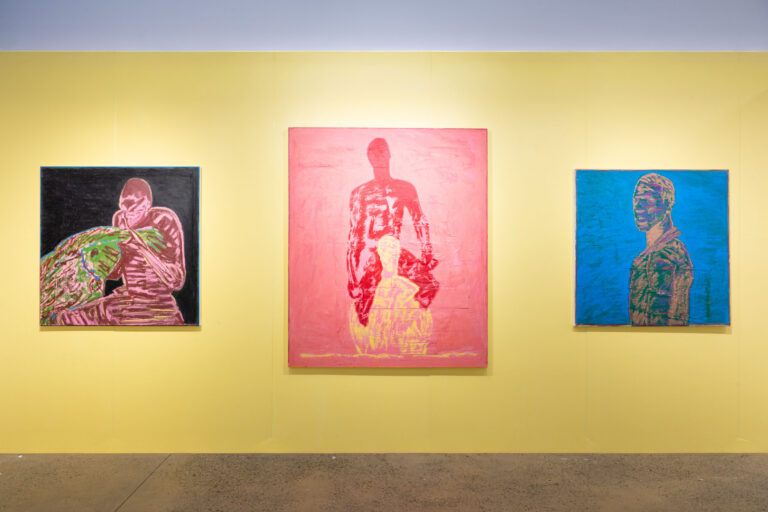





Across this week’s stories, Black art emerges as both archive and intervention. Museums are reconsidering whose histories belong in their collections, while a decades-old photograph has prompted the restoration of a model’s name to the record. Across the Bay Area, Black artists and cultural workers are building networks that refuse to be contained by a single institution or neighborhood. In Charleston, ancestral knowledge moves between archive, landscape and contemporary artistic practice, while Nnedi Okorafor’s latest novel continues its remarkable journey through the literary world.
Taken together, these stories point to a larger shift: the work of Black artists is increasingly understood not simply as representation but as a way of recovering names, activating memory, challenging inherited narratives, and imagining different futures. This week, we look at the people and institutions helping to make those possibilities visible.
Bechtler Museum Makes Rare Acquisition with David McGee’s Drum Call
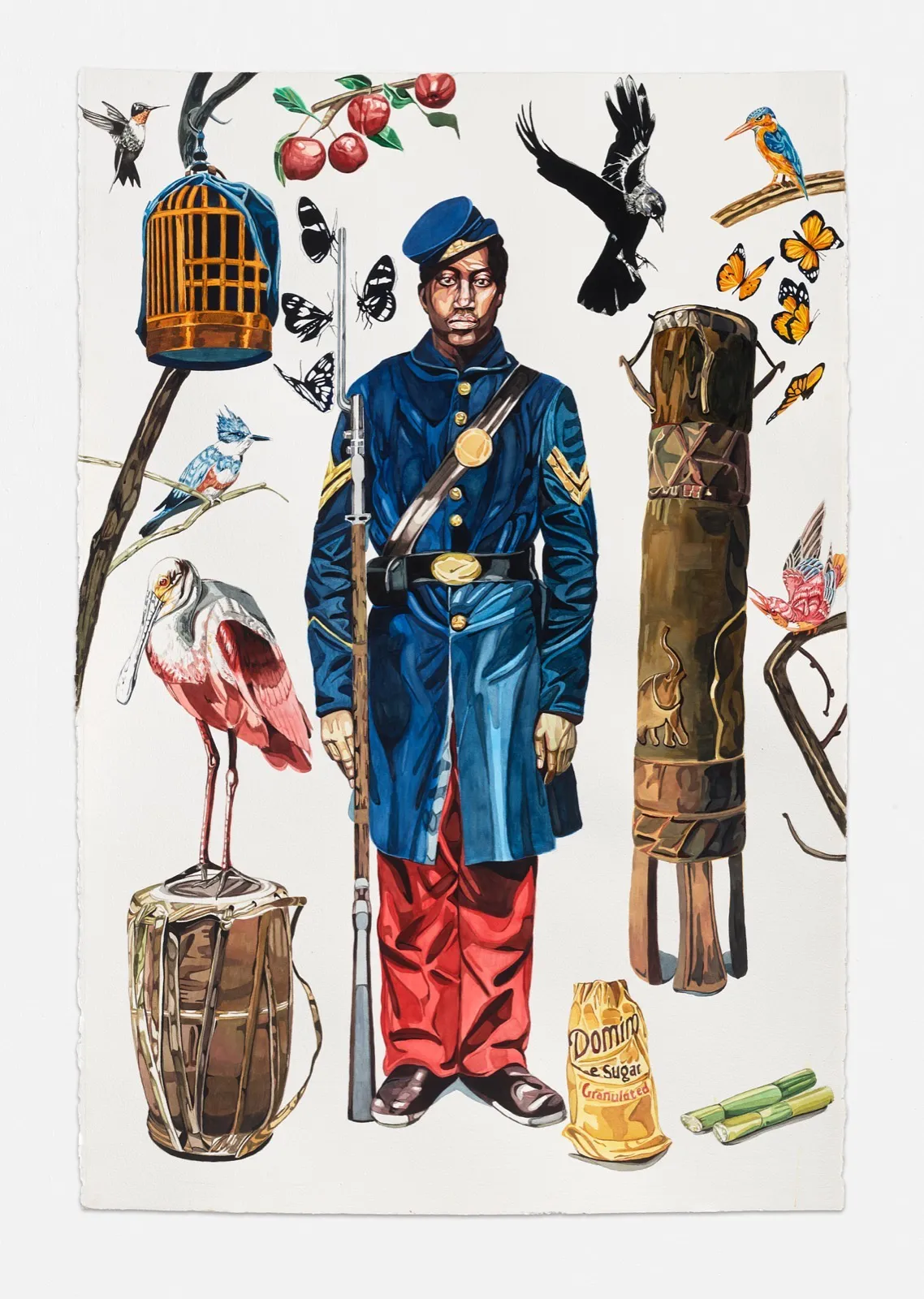
The Bechtler Museum of Modern Art in Charlotte has made a rare addition to its permanent collection with Drum Call, a 2025 watercolor on paper by Houston-based artist David McGee. It is the second artwork the museum has purchased since opening in 2010, giving the acquisition significance beyond the work itself.
Created to commemorate the 160th anniversary of Juneteenth, the painting depicts a Black Civil War soldier standing beside a drum and a birdcage. The soldier’s red trousers reference an all-Black North Carolina volunteer regiment whose members wore red pants during the Civil War, creating a direct connection between the historical subject and the museum’s Charlotte location.
For curator Katia Zavistovski, that local connection was central to the museum’s decision to acquire the work. But Drum Call also reflects McGee’s longstanding engagement with identity, history and representation.
The acquisition was made possible by the museum’s newly established Patrons Circle, a donor group whose contributions include funding for acquisitions. Until recently, the Bechtler had no dedicated fund for expanding its collection.
The purchase therefore marks two kinds of development: an institutional investment in contemporary Black art and a new willingness to expand a collection originally shaped around the holdings of the Bechtler family. In Drum Call, the museum has acquired not only an artwork about Black history but also a work that asks how that history is remembered and who gets to preserve it.
After 54 Years, Kwame Brathwaite’s Model Gets Her Name Back
For more than half a century, the woman at the center of one of Kwame Brathwaite’s photographs remained unnamed. Now, the National Gallery of Art has formally identified her as Manasie Ree Horn, restoring her name to a work that has long circulated of the history of the Black Arts Movement.
The photograph, made around 1972, was previously titled Untitled (Portrait, Reels as Necklace). It is now Untitled (Portrait of Manasie Ree Horn with Reels as Necklace). The National Gallery of Art’s records confirm the revised title and identify the work as part of its collection.
Horn, who was from Mobile, Alabama, moved to New York after high school and community college to pursue modeling. She worked with Grace Del Marco Modeling Agency, one of the early agencies representing Black models. She became one of the faces captured by Brathwaite, whose photography helped popularise the “Black Is Beautiful” movement.
The correction began when Horn’s son, Zane Horn, encountered the photograph while visiting the Getty Center’s presentation of Photography and the Black Arts Movement, 1955–1985. He immediately recognized his mother. Noticing that her name was absent from the exhibition text, he gathered evidence and contacted the Kwame Brathwaite Archive.
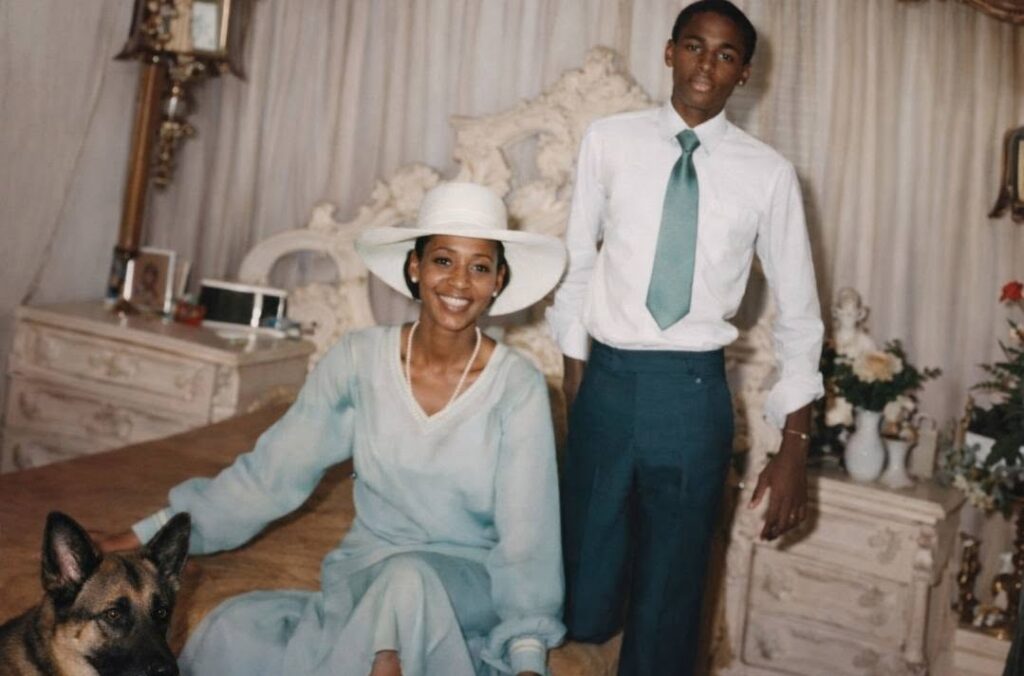
The result is a small but consequential act of historical repair. Horn died in 2002, but her image—and now her name—is traveling again, appearing in publicity for the exhibition’s final presentation at the Mississippi Museum of Art.
For a movement built around Black visibility and self-definition, the restoration of one woman’s name feels especially significant.
Nexus 2026 Expands the Map of Black Art in the Bay Area
Nexus: SF/Bay Area Black Art Week returns for its third edition from September 30 to October 4, bringing together museums, galleries, artists, creative spaces and communities across San Francisco, Oakland and the wider Bay Area. What began as a week of programming has increasingly become a regional network for Black art and culture.
Presented by the Museum of the African Diaspora, this year’s Nexus includes more than 58 arts organizations, galleries and creative hubs, alongside more than 70 Black artists and cultural leaders. Across the region, the program will encompass exhibitions, performances, conversations, open studios and other public events.
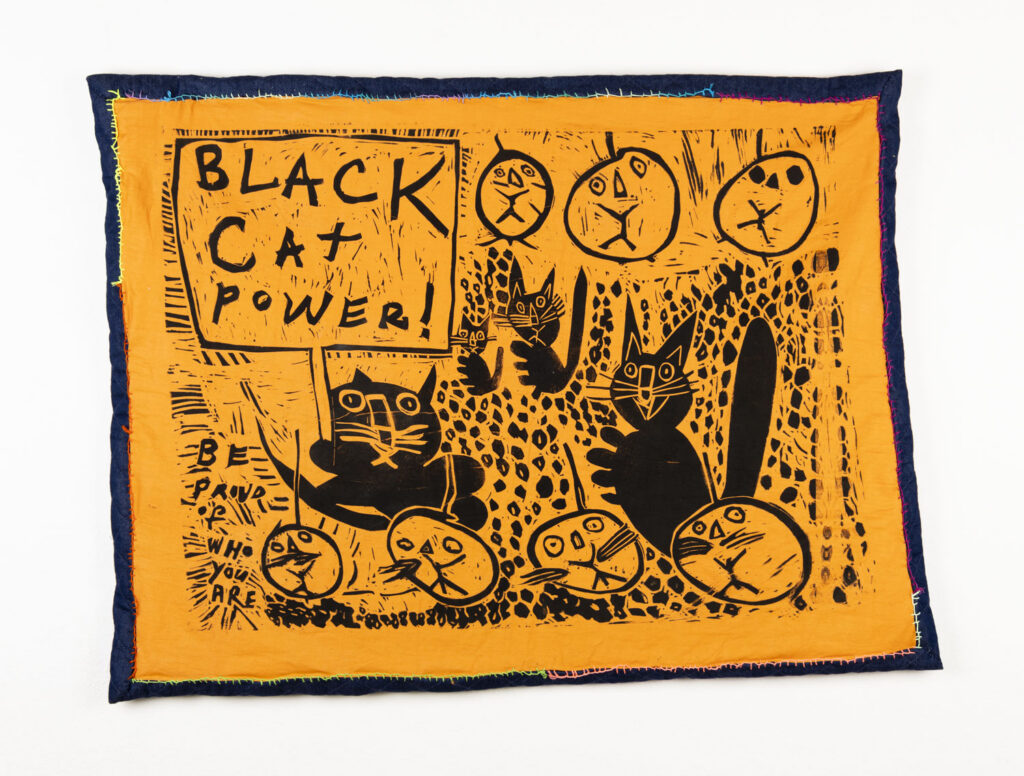
At MoAD, the week will open with Dewey Crumpler: Sonic Lineages, the San Francisco artist’s first institutional solo exhibition in the city, alongside After the Island: Ornament and Ceramic Practice in the Jamaican Diaspora, developed with Toronto’s Gardiner Museum. Dorian Reid’s Calling All Cats! will also debut through MoAD’s Emerging Artist Program.
The program moves beyond museum walls. The Artists Party returns to Yerba Buena Center for the Arts, while MoAD’s annual Afropolitan Ball will take place at the San Francisco Ferry Building on October 3.
The scale of Nexus is perhaps its most compelling feature. Its organizers are making visible an ecosystem that already exists: one built by Black artists, galleries, institutions and cultural workers whose contributions span generations.
Rather than concentrating Black art in one institution, Nexus offers a different proposition—a citywide, regionwide ecosystem in which the connections among artists, audiences, and institutions become the exhibition itself.
In Charleston, Land and Water Become Archives of Black Memory
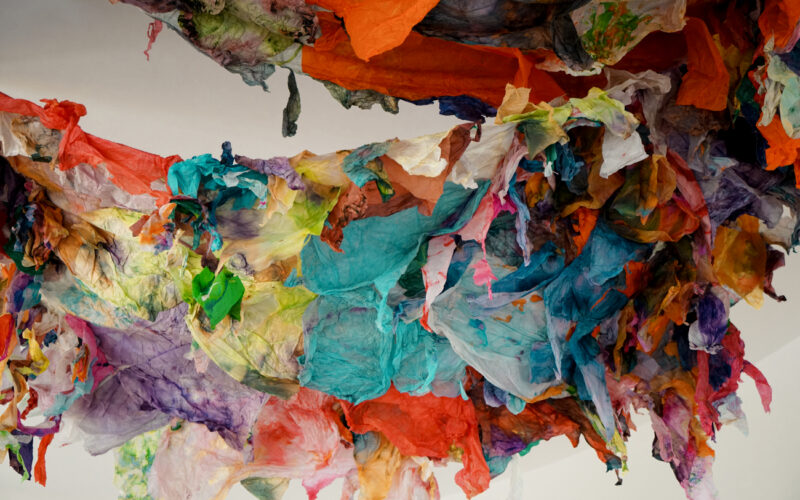
What survives when history is transmitted through making, memory and inherited practice rather than written records? Grounded in Grain, Washed in the Water, now on view at Charleston’s Halsey Institute of Contemporary Art, takes up that question through the work of Maya Freelon, Corey Alston, christa david and Derrick Beasley.
Guest-curated by Lauren Jackson Harris, the exhibition explores the relationships between land, water, memory and Black life in the American South. Presented in partnership with the Avery Research Center for African American History and Culture, it considers ancestral knowledge as something living—carried through bodies, materials, landscapes and creative practices rather than confined to an archive.
Basketry, collage, painting, sculpture and immersive installation become ways of activating histories that may never have been fully captured in written records. Grain becomes a metaphor for inheritance; water becomes an archive; and the body becomes both witness and vessel.
The collaboration between the Halsey Institute and the Avery Research Center deepens that proposition. While the Avery preserves documentary records of African American life, the exhibition asks what happens when artists engage histories that exist beyond documents and institutional collections.
Running through December 5, the exhibition will also host a series of public programs, including poetry, discussions, a symposium, and family programming.
In Charleston, Grounded in Grain, Washed in the Water makes a compelling case for understanding Black Southern traditions not as relics of the past, but as evolving systems of knowledge—ones that continue to shape how memory, identity and possibility are carried forward.
Nnedi Okorafor’s Death of the Author Shortlisted for the Glass Bell Awards
Nnedi Okorafor’s Death of the Author has been shortlisted for the 2026 Goldsboro Books Glass Bell Award, adding another major literary recognition to a novel that has already traveled widely across genres, audiences and institutions.
The novel is one of six finalists for the £2,000 prize, alongside works by Florence Knapp, Taylor Jenkins Reid, Beth Lewis, Virginia Evans and Patrick Ryan. The Glass Bell, launched in 2017, celebrates contemporary fiction across genres and is judged by the
Goldsboro Books team. The winner will be announced on October 1.
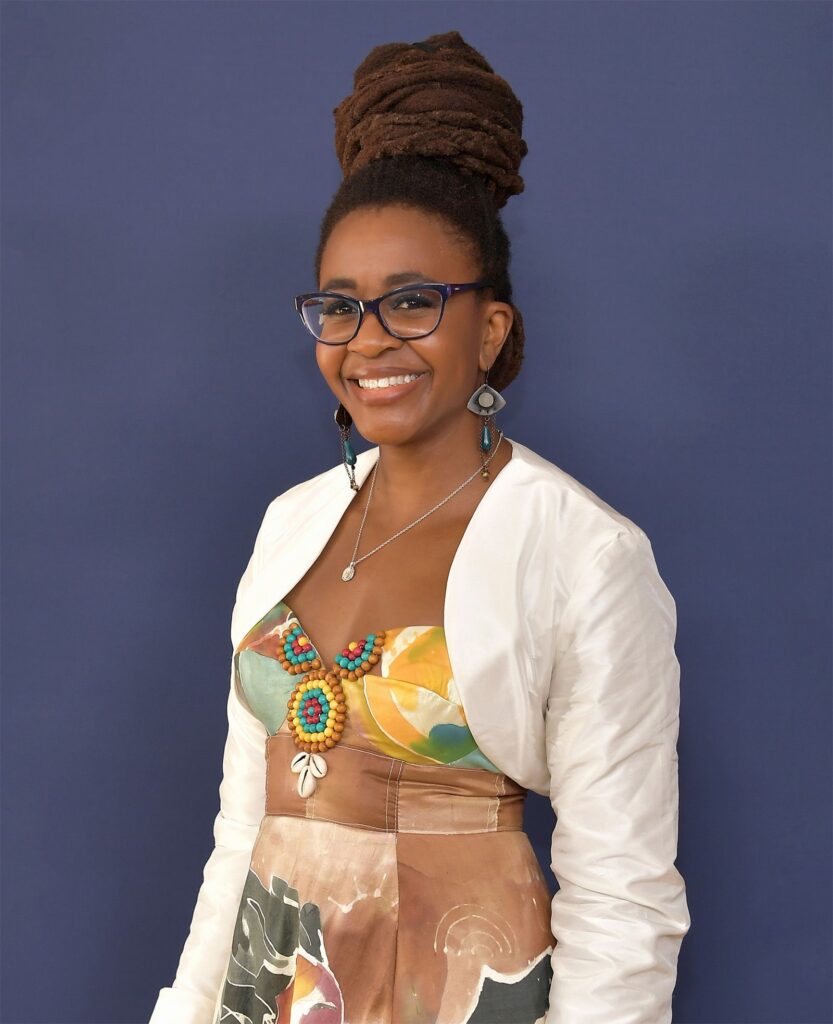
Death of the Author follows Zelu, a disabled Nigerian American writer whose professional frustrations lead her to write Rusted Robots, a science-fiction novel about warring artificial-intelligence factions on a post-apocalyptic Earth. The novel-within-the-novel unexpectedly transforms her career and life.
Since its January 2025 publication by William Morrow, the book has accumulated a formidable list of distinctions, including a place on TIME’s 100 Must-Read Books of 2025 and an NAACP Image Award. It has also become the centerpiece of the 2025–26 Great World Texts in Wisconsin program, bringing students and teachers across the state into sustained engagement with the novel.
The Glass Bell nomination is another marker of the book’s unusual reach. Okorafor’s work has long unsettled the boundaries separating African literature, speculative fiction and mainstream literary culture. With Death of the Author, those boundaries continue to prove increasingly porous—and increasingly irrelevant.
Compiled by Roli O’tsemaye