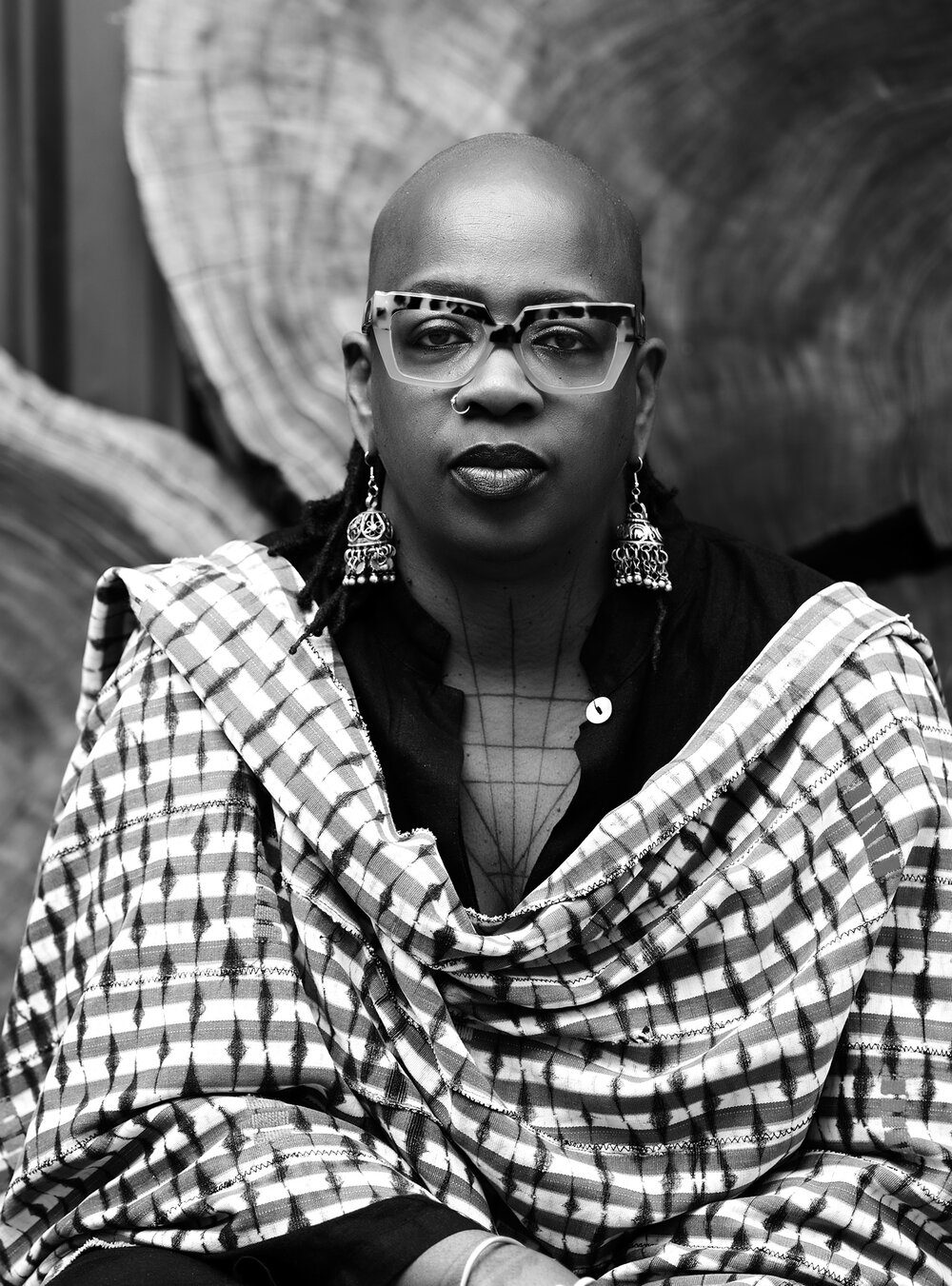

Across cities, archives and imagined futures, Black artists and cultural practitioners continue to find new ways of telling stories, preserving memory and reshaping the institutions through which culture is encountered. From Dakar to Lagos, London and Miami, this week brings together a series of developments that consider what we inherit, what we choose to remember and what remains possible.
Dak’Art 2026 Opens in Dakar, Bringing Together Artists from Africa and Its Diaspora
The 16th edition of the Dakar Biennale (Dak’Art) opened on November 19, 2026, bringing together artists, designers and cultural practitioners from across the African continent and its diaspora for a month-long exploration of contemporary artistic practices. Running until December 19, the 2026 edition is organised under the artistic direction of Morad Montazami and carries the title “(Anti)fragility: Arts of Repair and Counter-Shock Strategies”.
The official selection comprises 79 artists and practitioners, including 54 participants in the international exhibition, 22 in the design section, two invited artists and a tribute artist. The programme unfolds across Dakar and other regions of Senegal, with major exhibition venues including the former Law Courts and the National Art Gallery. Among the participating artists are Nigerian practitioners Victor Adewale, Kelechi Agwuncha and Onyeka Igwe; South African artist Lungiswa Gqunta; Kenyan artists Renée Akitelek Mboya and Chemu Ng’ok; Beninese artists Georges Adéagbo and Dominique Zinkpè; and Senegalese artists Aliou Diack and El Hadji Sy. Their participation reflects the geographical and generational breadth of this year’s selection.
Drawing on the idea of antifragility, the curatorial framework considers how communities and creative practices respond to instability, disruption and collective vulnerability. Its five thematic strands explore decolonial ecology and medicinal plant knowledge, fugitive practices, art and therapeutic possibilities, alternative systems of knowledge-sharing, and diasporic connections.
By bringing these conversations into dialogue, Dak’Art 2026 considers how artistic expression can become a means of repair, collective imagination and renewed social possibility.
Lagos Biennial’s “The Museum of Things Unseen” Opens a New Chapter in Institutional Imagination
The fifth edition of the Lagos Biennial has opened at Eko Atlantic City, Lagos, bringing together more than 70 artists from Nigeria and across the world under the title “The Museum of Things Unseen”. Running from November 14 to December 6, the 2026 edition examines the politics of visibility, cultural memory and the histories that remain overlooked within conventional museum structures.
Curated by Furen Dai, Chinyere Obieze and Sam Hopkins, under the artistic direction of founder Folakunle Oshun, the exhibition asks what a museum might look like if it were imagined beyond inherited institutional hierarchies and structural inequalities. Through installations, sculpture, photography, film and performance, participating artists explore alternative approaches to preserving and presenting cultural knowledge.
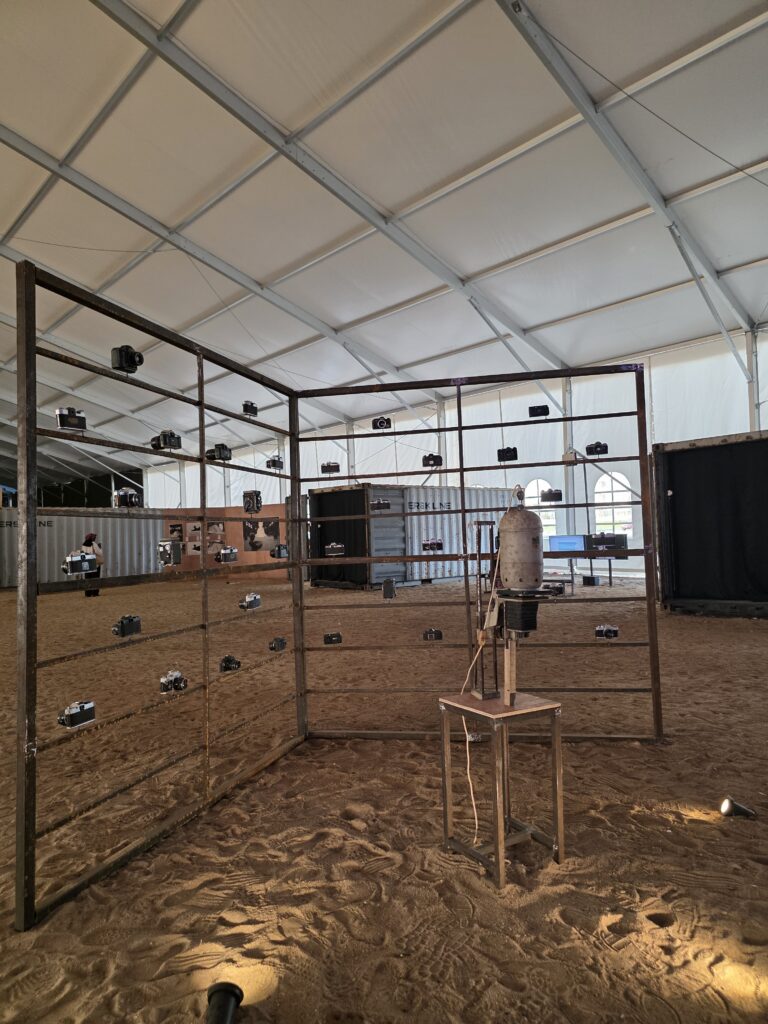
Participating artists include Nigerian practitioners Ade Adekola, Olukemi Lijadu, Alafuro Sikoki-Coleman and Egbiameje Omole, alongside internationally recognised artists such as Kara Walker, Hito Steyerl, Aki Sasamoto, Amie Siegel and Antoni Muntadas.
A significant development accompanying this edition is the introduction of the Àkéte Collection, an initiative intended to establish a permanent contemporary art collection and museum infrastructure in Lagos. The biennial’s parallel programme also features Adeju Thompson’s Lagos Space Programme in collaboration with Chicago-based Floating Museum.
The choice of Eko Atlantic City as the exhibition’s setting adds another layer to its inquiry. Situated within one of Lagos’s most ambitious urban developments, the biennial creates an opportunity to consider the relationship between the city’s changing physical landscape, its cultural memory and the institutions that will shape its future.
Hurvin Anderson Unveils New Windrush-Inspired Artwork at Brixton Underground Station
British painter Hurvin Anderson has unveiled Universal Travel, a new site-specific public artwork commissioned by Art on the Underground for Brixton Underground station in London. Launched on November 19, the work is part of a series of commissions responding to Brixton’s cultural history and its longstanding significance as a home for Black communities in Britain.
Presented across 20 frames, Universal Travel traces a mother’s journey from the Caribbean to London during the Windrush era, drawing together archival material, imagined scenes and fragments of collective memory. Its title references a 1955 advertisement published in Jamaica’s Gleaner newspaper, offering passage to Britain. Anderson also draws inspiration from Jamaican artist Carl Abrahams’ murals at Norman Manley International Airport in Kingston, which commemorate the island’s public histories.
The work moves between vibrant Caribbean colour and the black-and-white imagery associated with early photographic documentation of migration, evoking the emotional complexities of departure, arrival and the search for belonging. Its location carries particular resonance: London Transport recruited workers from Barbados, Trinidad and Jamaica during the 1950s, many of whom helped shape the city’s public transport system and communities.
For Anderson, whose practice frequently considers diasporic life, memory and belonging through painting, the commission offers an intimate reflection on the experiences that have shaped Black British identity. Installed within a busy public transport station, it brings these histories into everyday encounters, inviting commuters to consider the personal stories embedded within the city they move through. The artwork will remain on view for one year.
Yaa Asantewaa Art Prize Expands to Senegal, Recognising Two Women Artists
The Yaa Asantewaa Art Prize has announced Ghanaian-French artist Kwama Frigaux and Senegalese artist Fatoumata Sy as joint winners of its 2026 edition, marking a significant expansion of the award beyond Ghana and its diaspora to include women artists from Senegal.
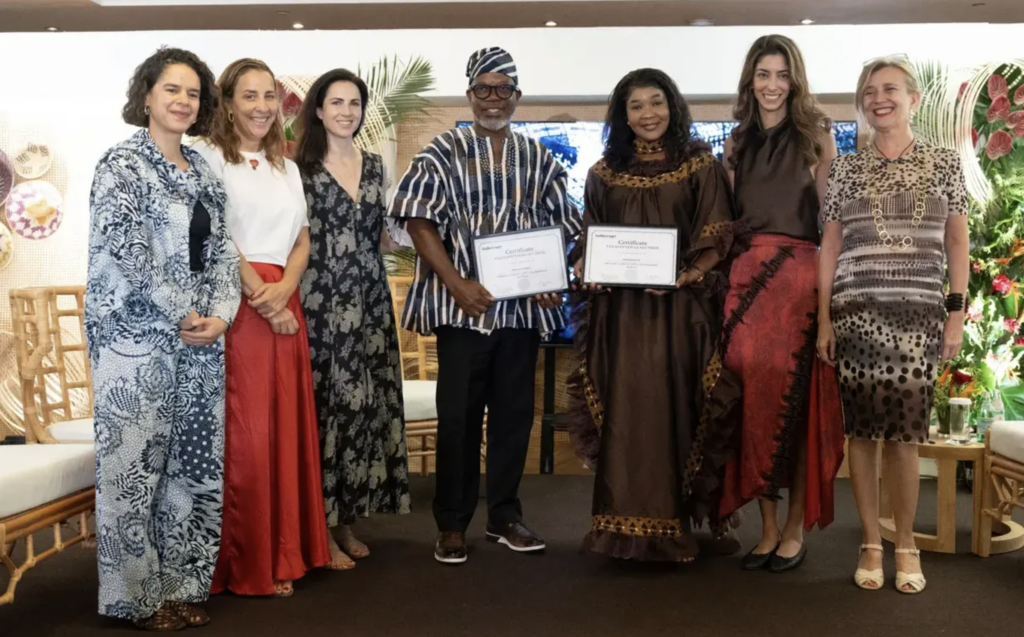
Established in 2021 by Accra- and London-based Gallery 1957, the prize was created to recognise and support women artists, providing opportunities for professional development and greater visibility within the contemporary African art ecosystem. This year’s expansion was undertaken in partnership with Institut Français du Sénégal, creating a new platform for exchange between Anglophone and Francophone West African art communities.
Both winners will receive $5,000, alongside a three-month residency in each other’s countries and opportunities to present solo exhibitions. Their selection was made by an international jury that included Touria El Glaoui, founder of 1-54 Contemporary African Art Fair, Ghanaian artist Serge Attukwei Clottey, and curators and cultural practitioners from major international institutions.
Named after the celebrated Ashanti queen mother Yaa Asantewaa, whose resistance against British colonial rule remains an important chapter in Ghanaian history, the prize carries a legacy of women’s leadership and self-determination. Its expansion reflects a broader ambition to build stronger networks of support for women artists across the continent.
According to the prize’s director, Leila Zakhem, the long-term vision is to develop the award into a leading Pan-African prize for women artists, extending its reach into other regions of Africa.
Miami Book Opens This Week, Brings Together Leading Black Literary Voices for Its 43rd Edition
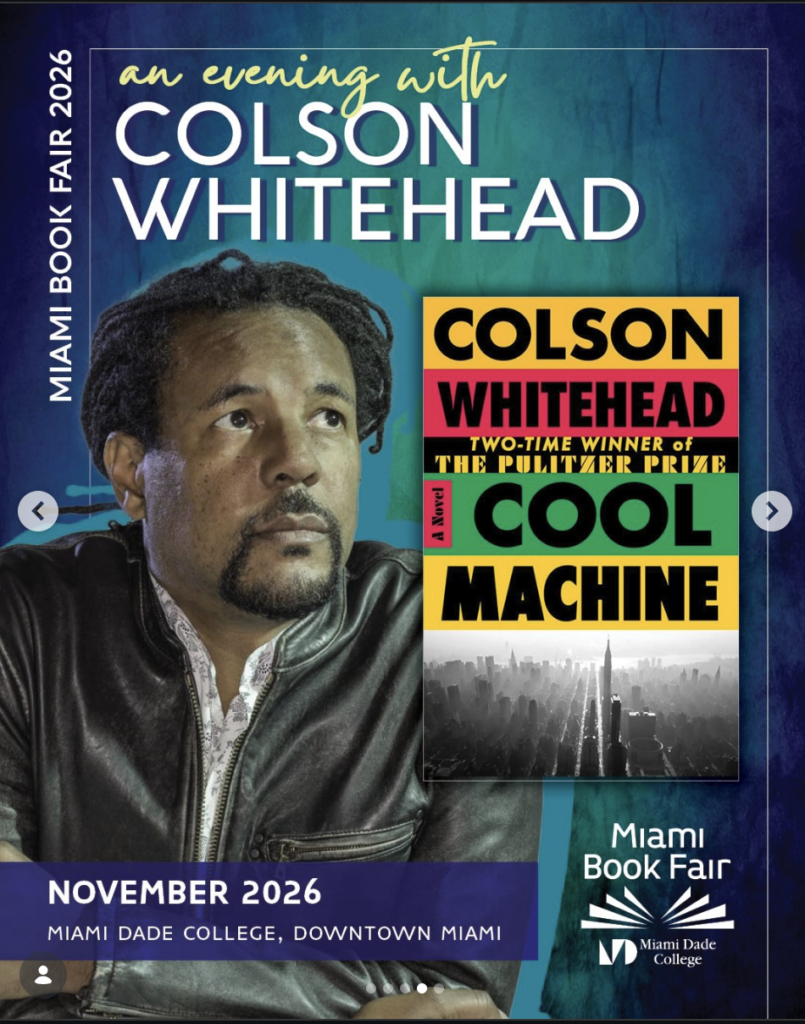
The Miami Book Fair returns for its 43rd edition from November 15 to 22, bringing nearly 500 authors to Miami Dade College’s Wolfson Campus for eight days of literary conversations, readings, book signings and public programming. Presented across multiple genres and languages, this year’s programme brings together established and emerging writers from different parts of the world, with a notable presence of Black and Caribbean literary voices.
Among the participating authors are Pulitzer Prize-winning novelist Colson Whitehead, Jamaican-born Booker Prize winner Marlon James, Haitian-American writer Edwidge Danticat, Tayari Jones, Deesha Philyaw, poet Kwame Dawes and poet and essayist Camonghne Felix. Several of these writers are also represented in the fair’s specialised literary programmes, including ReadCaribbean, which foregrounds Haitian and Caribbean literature, and ReadingLGBTQ+, which explores queer writing and cultural expression.
The fair’s programming also features conversations with writers whose works have shaped contemporary discussions around identity, history, migration and belonging. Of particular interest is the inclusion of four 2026 National Book Award finalists, including Danticat for Dèy and Felix for Let the Poets Govern: A Declaration of Freedom, alongside longlisted author Marlon James for The Disappearers.
Founded in 1984, the Miami Book Fair has grown into one of the United States’ significant literary gatherings, creating a meeting point for writers, readers, publishers and cultural institutions. Its continued attention to Caribbean and diasporic literature offers an important space for Black literary voices to engage audiences across languages, geographies and generations.
Closing Note
This week’s developments remind us that culture is continually being made, questioned and reimagined. Whether through a painting, an exhibition, a literary gathering or a new platform for artistic exchange, Black cultural practitioners continue to expand the possibilities of what can be remembered and what can be imagined. Until next week, keep looking, listening and discovering.
Compiled by Roli O’tsemaye