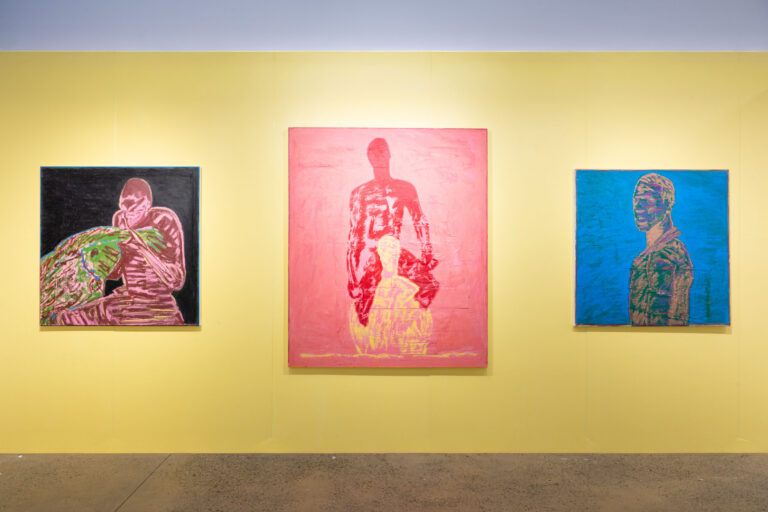
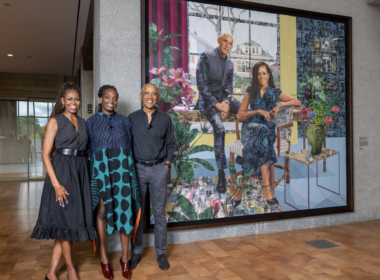



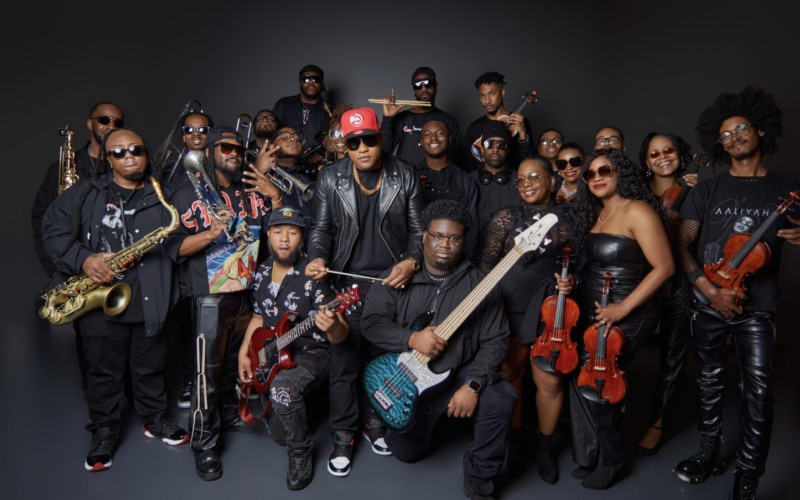
The rhythm of recognition feels unmistakable this week. From Fela Kuti’s historic induction into the Rock and Roll Hall of Fame to Ibrahim Mahama’s latest honor in Kassel, the global art and culture landscape continues to turn its gaze, however gradually, toward Black brilliance and its enduring influence.
Elsewhere, Barbara Chase-Riboud’s refusal of the U.S. pavilion at the Venice Biennale signals deeper tensions within cultural representation. At the same time, the 2026 Art Basel Awards foreground a network of artists, curators, and storytellers shaping contemporary discourse. And beyond institutions, Orchestra Noir reminds us that reinvention often begins at the margins, where new audiences, sounds, and possibilities take form.
Sponsored by the Miami Conventions and Visitors Bureau
Tanka Fonta Awarded 2026 Wi Di Mimba Wi Prize in Berlin
Cameroonian multidisciplinary artist Tanka Fonta has been named the 2026 recipient of the Wi Di Mimba Wi Prize, awarded by SAVVY Contemporary in partnership with AKB Stiftung. The biennial prize comes with €30,000, alongside a year-long program of production and curatorial support in Berlin.
Selected from a shortlist that included Jessica Ekomane, Nnenna Onuoha, Lerato Shadi, and Sarnt Utamachote, Fonta was recognized for a decades-spanning practice that traverses visual art, sound, poetry, and philosophy. The jury described his work as a “field of vibrations,” noting its ability to merge image, sound, and ancestral memory into fluid, open-ended compositions.
Born in Buea, Cameroon, Fonta has built an international presence with exhibitions at institutions including Haus der Kulturen der Welt and Fundação Bienal de São Paulo. His work is known for its immersive, sensory quality, often resisting fixed interpretation while expanding the boundaries of contemporary artistic form.
Meaning “We are together” in Cameroonian Pidgin, the Wi Di Mimba Wi Prize underscores sustained support for artists of color based in Germany, prioritizing long-term development over singular moments of recognition.
Barbara Chase-Riboud Declines U.S. Pavilion Role Amid Venice Biennale Controversy
As uncertainty continues to shadow the United States’ participation in the 61st Venice Biennale, artist and author Barbara Chase-Riboud has publicly addressed her decision to decline an invitation to represent the country. In a statement to the Financial Times, she described the opportunity as “splendid,” but ultimately concluded that it was “not the moment.”
Chase-Riboud, whose sculptural practice was recently honored across multiple Paris institutions, was among the first artists approached by the American Arts Conservancy (AAC), a newly formed body tasked with overseeing the pavilion. The New York Times also reported that photographer William Eggleston declined the commission, prompting the AAC to proceed with Mexico-based American sculptor Alma Allen.
Her decision arrives amid sweeping changes to the pavilion’s selection process. In 2025, the U.S. Department of State assumed oversight from the National Endowment for the Arts, introducing revised guidelines aligned with federal policy shifts under American President Donald Trump. The updated framework emphasized proposals that “promote American values” and demonstrate “exceptionalism and innovation,” while significantly shortening preparation timelines.
Further complications followed, including the collapse of a proposal by Robert Lazzarini and curator John Ravenal. By November, the State Department confirmed Allen’s selection alongside curator Jeffrey Uslip.
Despite the announcement, questions remain around the AAC’s formation, funding, and broader role, leaving the U.S. pavilion’s direction a subject of ongoing scrutiny.
Fela Kuti to Be Inducted into Rock & Roll Hall of Fame with Early Influence Honor
Fela Kuti, the architect of Afrobeat and one of Africa’s most influential cultural figures, is set to be inducted into the Rock and Roll Hall of Fame on November 14, 2026, at the Peacock Theater. He will receive the Early Influence Award, becoming the first African solo artist to earn the distinction.
The posthumous honor marks a crescendo in renewed global recognition of Kuti’s legacy. Earlier in 2026, he was awarded a Grammy Lifetime Achievement Award, following the 2025 induction of his seminal 1976 album Zombie into the Grammy Hall of Fame. These milestones reaffirm his enduring impact as both a musical innovator and a political voice.
Kuti joins a wide-ranging class of honorees, including Phil Collins, Sade, Wu-Tang Clan, Celia Cruz, and Queen Latifah, among others—situating his induction within a global constellation of musical influence.
Renewed interest in his work has also been fuelled by projects such as the podcast Fela Kuti: Fear No Man and forthcoming anniversary reissues marking 50 years of Zombie and Expensive Shit.
Born in 1938, Kuti fused jazz, funk, and West African rhythms into a radical sonic language that confronted corruption, authoritarianism, and colonial legacies—an influence that continues to reverberate across global music and resistance movements.
Black Voices Shape the 2026 Art Basel Awards Medalists
The 2026 Art Basel Awards program has unveiled its latest cohort of medalists, spotlighting a powerful constellation of Black artists, curators, and cultural figures whose practices continue to shape the global art ecosystem. Selected by an international jury, the awards recognize 33 individuals and institutions across disciplines, from artists to storytellers, underscoring the interconnected nature of contemporary culture.
In the Icon Artist category, Howardena Pindell is honored for her decades-long influence on abstraction and critical discourse. The Established Artist category features leading figures including Theaster Gates, Arthur Jafa, Julie Mehretu, and María Magdalena Campos-Pons—each recognized for practices that engage with history, Black identity, and spatial politics on a global scale.
Among emerging voices, Precious Okoyomon stands out for an interdisciplinary practice rooted in ecology, migration, and colonial memory.
Beyond artists, the awards foreground the broader cultural infrastructure sustaining contemporary art. Pamela J. Joyner is recognized in the Patron category, while Berlin-based SAVVY Contemporary earns distinction in the Museum and Institution category. Curator Azu Nwagbogu, founder of the African Artists’ Foundation and LagosPhoto, joins the Curator category, reinforcing Africa’s curatorial leadership on the global stage.
In the Media and Storyteller category, Hilton Als and Siddhartha Mitter are recognized for shaping critical conversations around Black/African art and culture.
Set to be honored during Art Basel in Basel this June, the awardees reflect a shifting center, one in which Black artistic and intellectual contributions remain central to how contemporary art is imagined, produced, and understood.
Ibrahim Mahama Awarded 2026 Arnold Bode Prize in Kassel
Ibrahim Mahama has been named the recipient of the 2026 Arnold Bode Prize, awarded by the city of Kassel. The honor, which carries a €10,000 award, recognizes Mahama’s far-reaching artistic practice and its sustained engagement with global histories of labor, migration, and exchange.
Working across Accra, Kumasi, and Tamale, Mahama has built an internationally acclaimed practice rooted in material and memory. He is widely known for his monumental installations constructed from reclaimed jute sacks—objects once used in the global trade of commodities such as cocoa and coal—which he stitches together to form vast, tactile surfaces that often envelop entire architectural structures. Through these works, Mahama traces the movement of goods and bodies, exposing the often-invisible labor systems underpinning global economies.
Beyond his studio practice, Mahama has played a pivotal role in shaping Ghana’s contemporary art infrastructure. He is the founder of artist-led spaces including Red Clay Studio, Savannah Centre for Contemporary Art (SCCA), and Nkrumah Volini—initiatives that provide residencies, exhibitions, and critical support for emerging and established practitioners.
Named after Arnold Bode, founder of documenta, the prize underscores Kassel’s legacy as a site for critical artistic discourse. Mahama’s selection signals a continued recognition of practices that engage deeply with history, materiality, and the socio-political conditions shaping contemporary life.
Orchestra Noir Reimagines 2000s Hip-Hop and R&B for the Concert Hall
Orchestra Noir, the all-Black ensemble founded by Jason Ikeem Rodgers, is reshaping the sound and audience of classical music across the United States. By transforming early 2000s hip-hop and R&B into orchestral arrangements, the Atlanta-based group has built a growing national following, regularly selling out concert halls from Houston to New York and Los Angeles.
Founded in 2016, Orchestra Noir emerged from Rodgers’ experience navigating predominantly White classical institutions despite his training at the Cleveland Institute of Music and the University of North Carolina School of the Arts. Seeking to bridge that cultural distance, Rodgers established the ensemble as an independent platform—one that centers Black musical traditions without compromise.
Over the past decade, the orchestra has expanded its reach through high-profile collaborations and performances, including a landmark staging of Red Bull Symphonic alongside Rick Ross, original compositions for the High Museum of Art, and appearances tied to the National Juneteenth Museum. Partnerships with major platforms such as Atlantic Records and The Tonight Show Starring Jimmy Fallon have further amplified its visibility.
The news arrives as Orchestra Noir continues an active national touring circuit, with new dates and expanded productions signaling its next phase of growth. Beyond performance, its relevance lies in how it redefines access to classical music, drawing in audiences historically excluded from concert halls while building a model that merges cultural authenticity with scale. For Rodgers, the goal is clear: not a moment, but a movement positioning Black orchestral expression on national and increasingly global stages.
Compiled by Roli O’tsemaye